Introduction to Blood Pressure

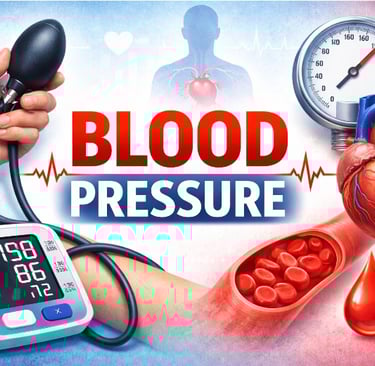
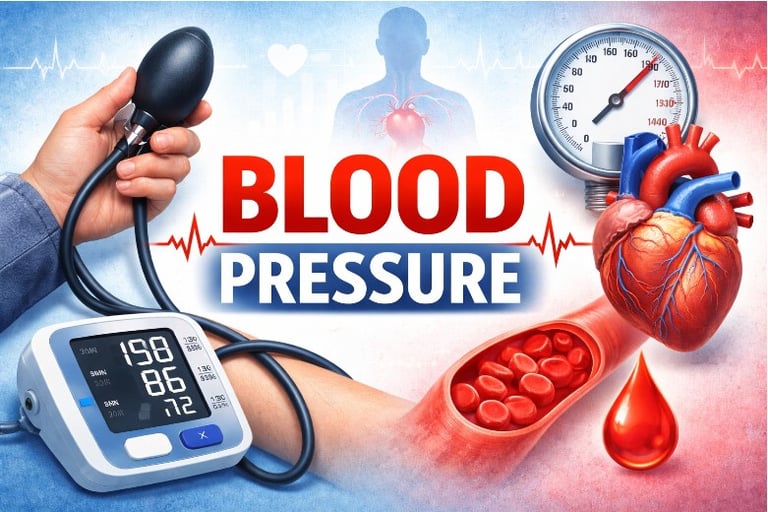
Blood pressure is the force of blood pushing against the walls of arteries as the heart pumps it through the body. As a critical vital sign, it is used to evaluate the heart's workload and the overall cardiovascular health of an individual.

1/18/20266 min read

Blood pressure is the force exerted by blood against the walls of arteries while pumping blood through the body by the heart, so it is directly related to the heart condition contributing directly to the overall health of the body. It is a vital sign used by healthcare professionals to assess the health condition of the individuals according to the need. It is measured in mm of Hg and expressed as two numbers.

  • Systolic pressure (top number)

Systolic pressure is the pressure in your arteries when the heart beats and pumps blood.

  • Diastolic pressure (lower number)

Diastolic pressure is the pressure in your arteries when the heart rests and between beats.

For example; blood pressure is expressed as 120/80 mm Hg. Here, 120 refers to the systolic blood pressure, whereas 80 refers to the diastolic blood pressure. Although, numbers are important, each individual can react to the different blood pressure accordingly. So, symptoms and other clinical findings are also correlated. The numerical value of blood pressure is important to categorize the blood pressure as below:

BLOOD PRESSURE SYSTOLIC mm Hg and/or DIASTOLIC mm Hg

CATEGORY (top/upper number) (bottom/lower number)

NORMAL LESS THAN 120 and LESS THAN 80

ELEVATED 120 – 129 and LESS THAN 80

STAGE 1 HYPERTENSION 130 – 139 or 80 – 89

(High Blood Pressure)

STAGE 2 HYPERTENSION 140 OR HIGHER or 90 OR HIGHER

(High Blood Pressure)

SEVERE HYPERTENSION HIGHER THAN 180 and/or HIGHER THAN 120

(If you don’t have symptoms*, call your health care professional.)
Hypotension (Low Blood Pressure):

It is rare but persistent low blood pressure can cause issues. It can also happen in clinically compromised individuals such as in septic shock. The symptoms in case of low blood pressure are as follows:

  • Dizziness

  • Fainting

  • Fatigue

  • Blurred vision

  • Confusion

  • Nausea

Hypertension (High Blood Pressure):

It is a major risk factors for fatal clinical conditions such as heart attack, heart failure, stroke, kidney failure etc. It normally doesn’t show symptoms so needs to be monitored properly according to the need of individuals. Often absent but common symptoms of high blood pressure are as follows:

  • Chest pain

  • Vision changes

  • Sudden and severe headache

  • Difficulty speaking

How To Check Blood Pressure

Automated machines which might be portable or monitors in hospital setting take blood pressure automatically. In home setup also, some portable digital blood pressure machines are available. But the conventional method for blood pressure check which is still in use in many setups is by the use of sphygmomanometer and stethoscope.

Before checking blood pressure, individual is made ready as follows;

  • Take rest for 5 minutes in relaxing position.

  • Avoid stimulants which can raise blood pressure such as caffeine, smoking, exercise.

  • Emptying of bladder is necessary as urge can cause false reading.

  • Rest your arm in the level of your heart for correct reading.

  • Find the proper cuff and place it 1 inch above the elbow bend in upper arm.

Take reading by the use of sphygmomanometer and stethoscope:

  1. The stethoscope bell is placed over the brachial artery on the inner elbow just below the cuff.

  1. The cuff is inflated above the usual systolic pressure.

  1. The air is slowly released from the cuff (about 2 mmHg/sec).

  1. The pressure is noted in the sphygmomanometer when you hear the first tapping sound (systolic) and the last sound (diastolic) via stethoscope.

Note: Practical training is required for the proper blood pressure checking and monitoring.

Monitoring at home is especially important for:

  • To assess the blood pressure of patient diagnosed with hypertension.

  • For the assessment of blood pressure when medicine is changed, new medicine is assigned or doses are altered.

· For the closer monitoring of people with risk factors of developing hypertension or other clinical condition due to deranged blood pressure.


Risk factors of high blood pressure

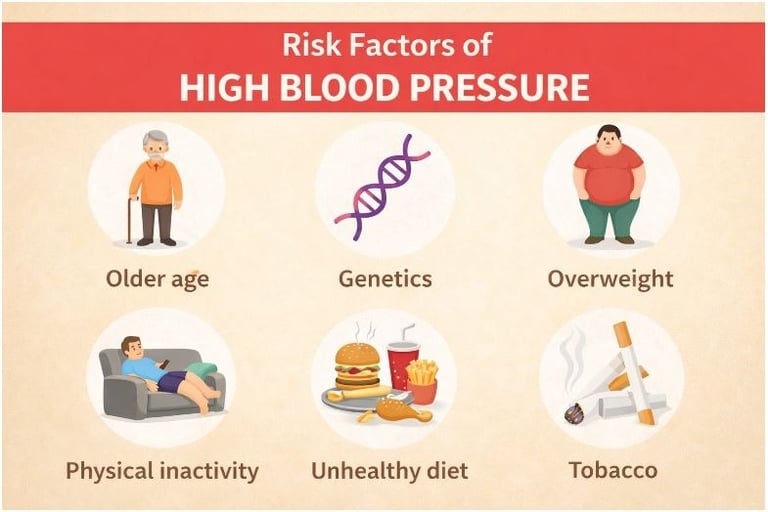
High blood pressure has many risk factors which includes:

  • Age: The risk of high blood pressure increases with age. High blood pressure is more common in men before 65 also whereas women are more likely to develop high blood pressure after age 65.

  • Race: High blood pressure is particularly common among Black people as It develops at an earlier age in Black people than it does in white people.

  • Familial history: If you have a parent or sibling with the condition, then you are more likely to develop blood pressure. It can be somewhat managed by maintain healthy lifestyle.

  • Obesity: Gaining weight can cause changes in different body parts including blood vessels, kidneys and other organs. These changes can play major role in increasing blood pressure and also in various heart diseases which eventually effect blood pressure.

  • Lack of exercise. People who are inactive can have higher heart rates due to lack contributing in blood pressure. Also, weight gain is also another effect of lack of exercise and it is another major cause for the rise in blood pressure as mentioned above.

  • Smoking: Smoking, chewing tobacco or vaping raises blood pressure for a short while and plays vital role as risk factor for long run. Tobacco smoking injures blood vessel walls causing the process of hardening of the arteries. Quitting is the best solution.

  • High sodium intake: A high amount of sodium in food can cause the body to retain fluid. This increases blood pressure by increasing the blood volume in circulation.

  • Low potassium levels. Potassium is important to keep the balance of salt in the body’s cells. So, balancing of the amount of potassium is closely related to the good health of the heart.

  • Drinking too much alcohol: Extreme use of alcohol can cause the increase in blood pressure

  • Stress. High levels of stress can lead to a temporary increase in blood pressure. Stress-related habits cause long term hypertension condition

  • Certain chronic conditions. Kidney disease, diabetes and sleep apnea are some of the conditions that can lead to high blood pressure.

  • Pregnancy. Pregnancy causes high blood pressure in some conditions.


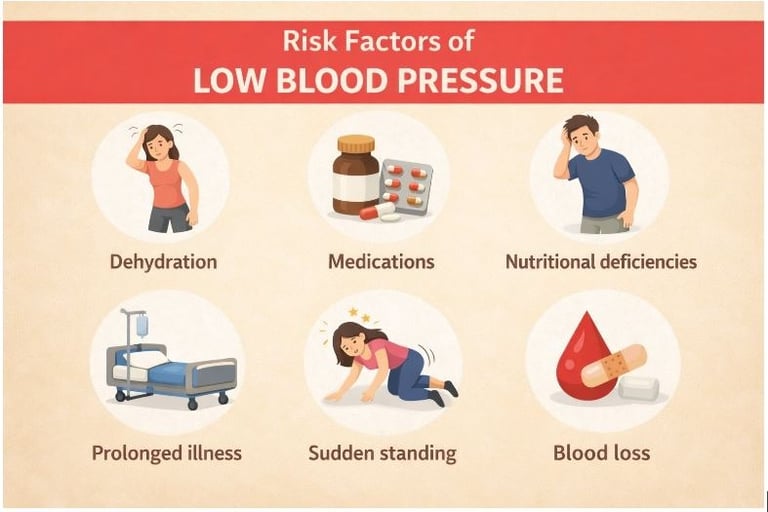
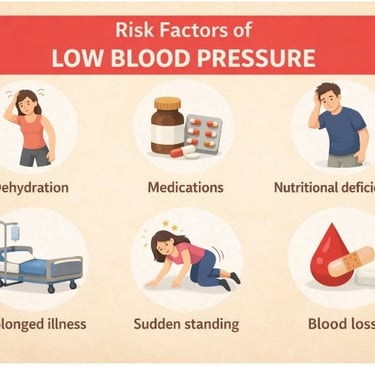
Risk factors for low blood pressure (hypotension):

  • Age: Adults over 65 are more sensitive to low blood pressure.

  • Pregnancy: Due to circulatory expansion, it is normal in first few weeks to have low b.p.

  • Prolonged Rest: It can contribute to postural hypotension.

  • Extreme Temperatures: Very high and low temperature in weather conditions can cause b.p. to drop.

Other than that low blood pressure is rare until another clinical condition came into play as below:

  • Heart Problems: Several heart problems such as slow heart rate (bradycardia, might be caused by other health conditions), heart attack, heart failure, heart valve issues can be major reason for low blood pressure.

  • Blood Pressure Medicines: Diuretics and beta blockers used to manage high blood pressure if over used may cause low blood pressure.

  • Endocrine Issues: Underactive thyroid, Addison's disease, low blood sugar (diabetes) due to endocrine issues may be another reason for low blood pressure.

  • Blood Loss or less blood volume: Severe bleeding, diarrhea, vomiting, or insufficient fluid intake (dehydration).

  • Neurological Conditions: certain neurological conditions such as Parkinson’s disease may be another reason for b.p. Dropping.

  • Blood Pressure Medicines: Diuretics and beta blockers used to manage high blood pressure if over used may cause low blood pressure.

Severe Acute Events: These events cause blood pressure to drop which needs immediate medical care such as:

  • Anaphylaxis due to severe allergic reaction.

  • Septic shock due to severe infection.

  • Hypovolemic shock due to severe blood loss.

Related Complications

High blood pressure can be fatal and threatening to the life of an individual. In most cases damage from high blood pressure (also known as hypertension) happens over time. If it is not detected and controlled, high blood pressure can lead to various other problems or diseases such as:

  • Heart attack when arteries get blocked and blood flow to the heart muscle is prevented.

  • Stroke by the bursting of the blood vessels supplying blood to the brain due to high blood pressure

  • Heart failure is caused when high blood pressure makes the heart pump harder This can cause the heart to get bigger struggling to pump enough blood to the body.

  • Kidney disease when damage occurs in the arteries around the kidneys which can stop them from filtering blood properly.

  • Vision loss can occur due to strained or damaged blood vessels in the eyes.

  • Sexual dysfunction such as erectile dysfunction can be seen in men and lower sex drive in women due to high blood pressure.

  • Heart disease can be caused by high blood pressure having chest pain as the common symptoms.

  • Atherosclerosis is the buildup of the plaque in the wall of the arteries caused by the damaging of arteries due to high blood pressure.

Lastly, for proper information and health care, please visit nearest health service center without relying completely in internet.

References

  1. Hall, J. E. (Ed.). (2025). Guyton and Hall textbook of medical physiology (16th ed.). Elsevier.

  2. Klabunde, R. E. (2021). Cardiovascular physiology concepts (3rd ed.). Wolters Kluwer.

  3. Barrett, K. E., Barman, S. M., Brooks, H. L., & Yuan, J. X.-J. (2019). Ganong’s review of medical physiology (26th ed.). McGraw-Hill Education.